
Spring '24
Italian Department Spring Graduate Courses 2024

War and Experience. Twentieth-Century Narratives
16:195:515/560:657. Tu 2-5 pm, AB5050
Paola Gambarota
The clash between institutional representations of war (e.g., by government, public media, school) and the lived experiences of war produces the need to make sense of those experiences and to integrate them into public discourse. How was fighting and dying in war legitimized in the twentieth century and what did war mean to those who fought it? This seminar explores the ways in which the arts have been used to frame and understand the modern experience of war. Drawing on classic theories (e.g., Virilio, Benjamin, Joan Scott, Hayden White, Fussel, Leed, Barthes, Jameson), we will analyze how cultural and formal paradigms interact with lived historical events in memoirs (e.g. D’Annunzio; Jünger), fictional narratives (e.g. Lewis, Remarque, Malaparte), poems (Futurism; Hermeticism, Neo-Avantgarde), postcards, photographs, and films (e.g., Rossellini, Boulting, Patierno). Our discussion will concentrate on the relation between experience and representation and the question of the medium: how did different genres and media affect the articulation of the war experience? No knowledge of Italian required.
Click here for course information (This archived document is no longer maintained and may not meet accessibility standards. To request content in an accessible format, contact us.)
 Multispecies Humanities
Prof. Vetri Nathan
Wednesdays 4.30-7 pm
16:560:691
This new transcultural and transdisciplinary course explores the entangled lives of humans, fungi, plants, microorganisms and animals via the newest thinking in the Environmental Humanities. Learning and research in the course will be connected to the structure and activities of a new humanities lab (www.thecybercenelab.org). We will experiment with innovative ways of engaging with the worlds around us by questioning the hierarchical classification of species as well as the resulting commodification and othering of lives in different transnational, national, regional and local contexts. We will also explore possible public-facing solutions towards renewed multispecies healing and habitability by studying historical and contemporary restorative strategies. Taught in English.
Click here for course information (This archived document is no longer maintained and may not meet accessibility standards. To request content in an accessible format, contact us.)
Summer '24
Italian Department Summer Graduate Courses 2024

Exploring Contemporary Italy
16:560:691 cross listed with 01:560:491
5/28-6/21, 2024
Taught by Prof. Andrea Baldi
Taught in Italian, the course tackles a wide range of pressing contemporary topics: the north-south divide, gender conflicts, environmental issues, migration, visual culture, etc. We will nalyze different kind of texts: short fiction, essays, newspaper articles, movies, video clips, etc. Authors include: Sciascia, Calvino, Buzzati, Ortese, Rodari, Scego, Kuruvilla, Lahiri, and errante. Assignments and most readings will be in Italian, with excerpts from critical essays in English. Completion of questionnaires, short papers, participation in a Forum, and two online one-to-one meetings required.
 Storia dell'Italia Multilingue in Musica
16:560:674 cross listed with 01:560:492
7/8-8/2, 2024
Taught by Prof. Carmela Scala
"L'Italia Multilingue in Musica" offers an in-depth exploration of the cultural and linguistic influences that have shaped and continue to shape Italy's rich musical tradition. This course aims to uncover how Italy, a nation with an extraordinary musical history, has been influenced by and has influenced other cultures and languages through music. Students will have the pportunity to expand their knowledge of Italian music, gain a deeper understanding of languages and regional dialects, and discover the multilingual roots of Italian musical culture.
Maria Di Costanzo
 Get Inspired!
Whether she’s watching “Life is Beautiful” in its original Italian, discussing the plays and novels of Luigi Pirandello with her aunt in Naples, or learning about the social and political issues facing modern Italy, Maria Di Costanzo always feels inspired in the Department of Italian.
“It’s a total life experience,” says Maria, a junior. “I’ve learned so much in this department — with this beautiful language at the center, extending into literature, film, and culture.”
She has also learned a lot about herself. When this Piscataway, N.J. native started taking Italian classes at Rutgers, she was hesitant to even speak in class, wondering if the Naples dialect she learned from her family might hinder her ability to speak standard Italian. Now she’s mastered the language and is president of the Italian Club. Adult students auditing courses seek out her help to fulfill their dream of learning Italian.
“I feel I’ve been transformed from someone insecure in their ability to speak the language to someone who helps others grow and become more confident in the language,” she says.
With her Italian major, and her minor in international and global studies, she’s also feels ready for her future.
“I’ve always been fascinated with the idea of working at the United Nations,” she says. “I feel the options are limitless.”
Prospective Students
Meet our Italian Majors and Alumni
-
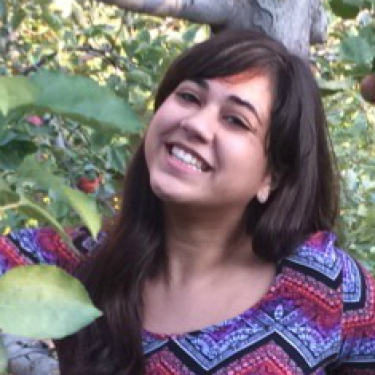
Josmary Medrano
- Information
- 2017
-

Krista Wohlbold
- Information
- 2017
-

Massimo Guglietta
- Information
- 2018
Majoring in Italian can take you where you want to go!
In a large research university like Rutgers, students in the Department of Italian benefit from a liberal arts college atmosphere—in smaller, seminar-style courses, they receive training directly from our award-winning research faculty. Most students in our program begin with little to no Italian, and complete their degree able to understand, discuss, and write analytically about novels, poetry, film, and pressing issues of international significance in their original language.
Our undergraduate program prepares students for a globalized world by providing them cultural immersion and fluency in a language other than English, and solid training in the humanities through a focus on textual analysis, critical thinking and writing, and intercultural interpretation. A degree in Italian or Italian Studies opens the door to many professional graduate schools, including law schools and schools of international affairs or diplomacy, as well as to careers in education, international business (finance, import/export, wine, food, fashion), journalism, and public relations.
Arts and Sciences in Action: An Italian View of the World
"Whether she’s watching “Life is Beautiful” in its original Italian, discussing the plays and novels of Luigi Pirandello with her aunt in Naples, or learning about the social and political issues facing modern Italy, Maria Di Costanzo always feels inspired in the Department of Italian."
Maria Di Costanzo
Study Italian
Learn a beautiful and expressive language
Study iconic art, cinema, and literature
Explore Italian history, politics, and culture
Live in a beautiful Renaissance town
The Department of Italian is part of the School of Arts and Sciences
As an Italian major in the School of Arts and Sciences, you’ll have full access to a liberal arts education that spans 47 programs for undergraduates. You will acquire both the specialized knowledge of the field you choose to study in depth, and broad knowledge of the world from the renowned scholar-teachers at Rutgers. You’ll graduate ready to meet contemporary challenges in your workplace, in your hometown, and in the global community.
Visit Rutgers School of Arts and Sciences Website
Course Schedule
Select a different year and/or semester:
Showing:
Show and hide details about course sections:
|
|
Yr | Term | Course | Cr | Title |
|---|
Page 1 of 2